
A denture that stays where you put it.
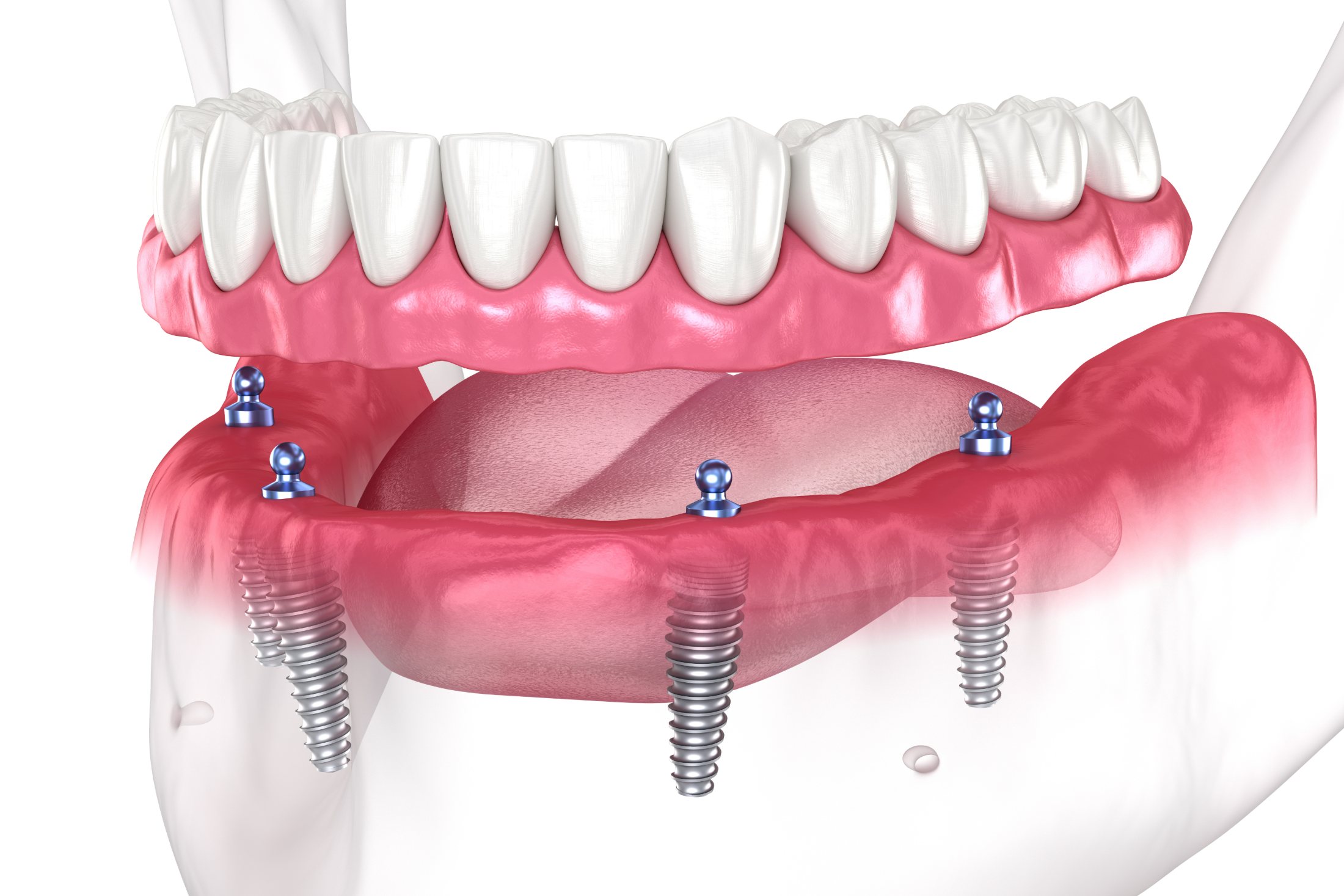
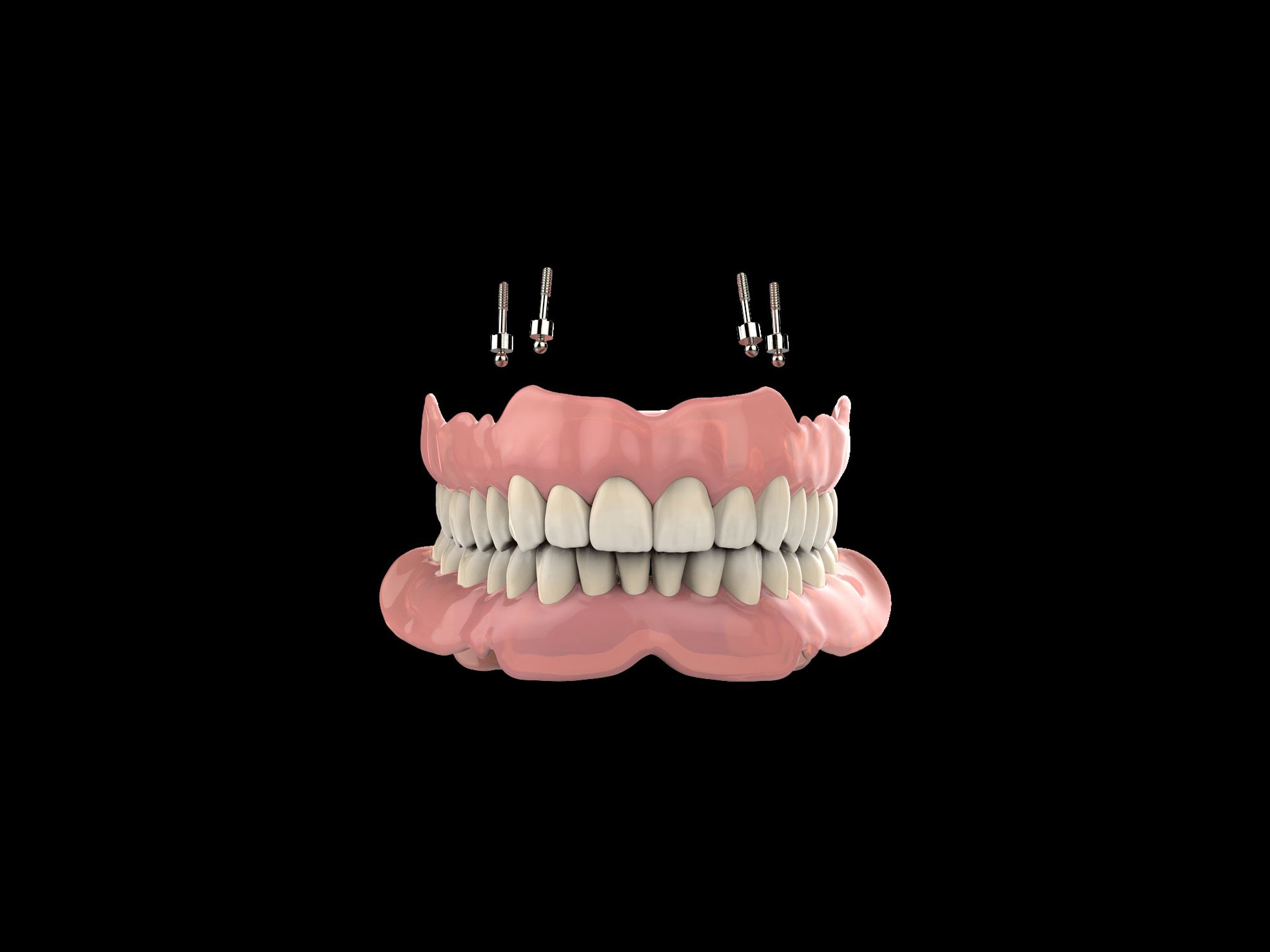
Two or more implants in the jaw hold the denture by a ball or bar attachment. It clicks on, it does not slide, and you never buy adhesive again.

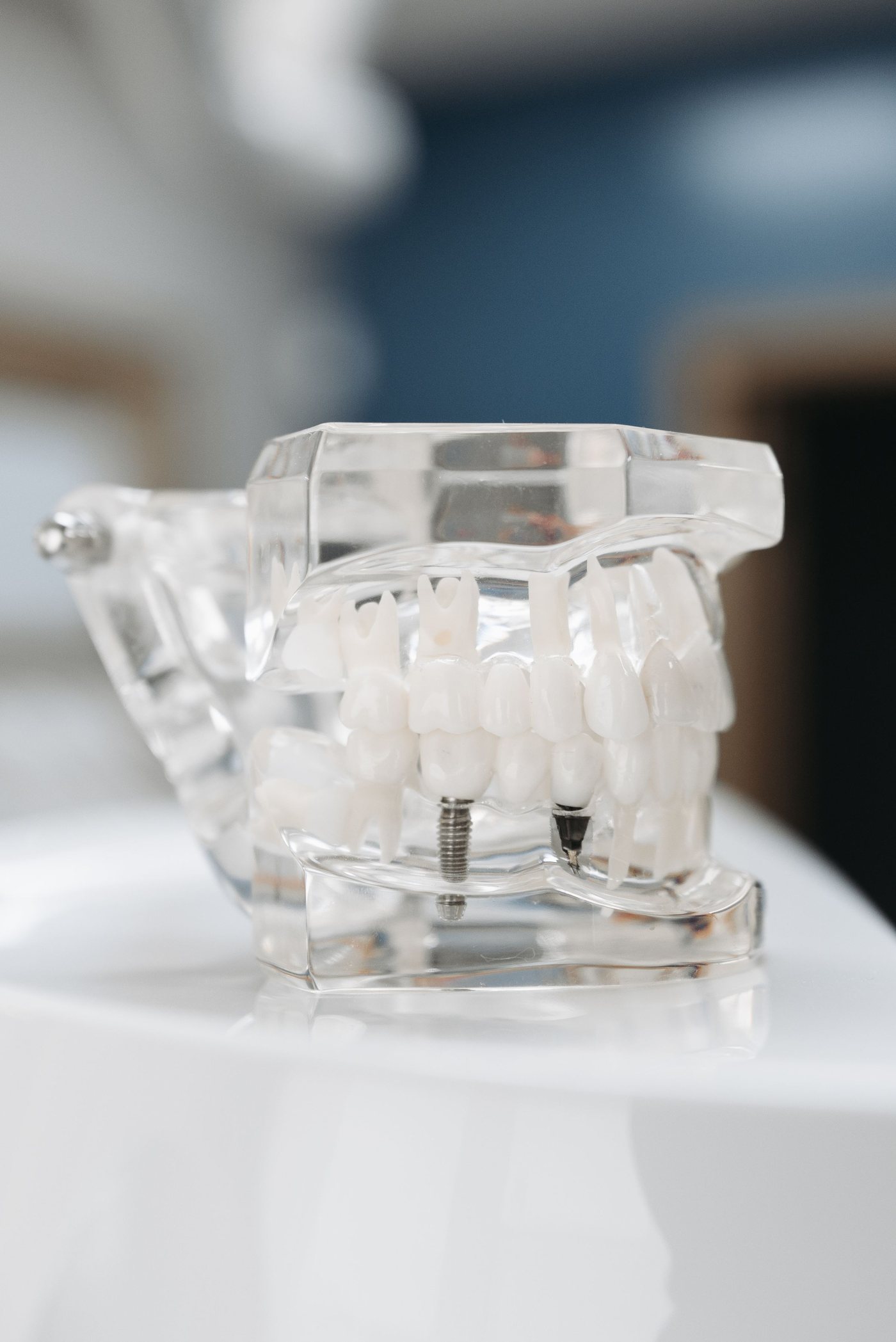
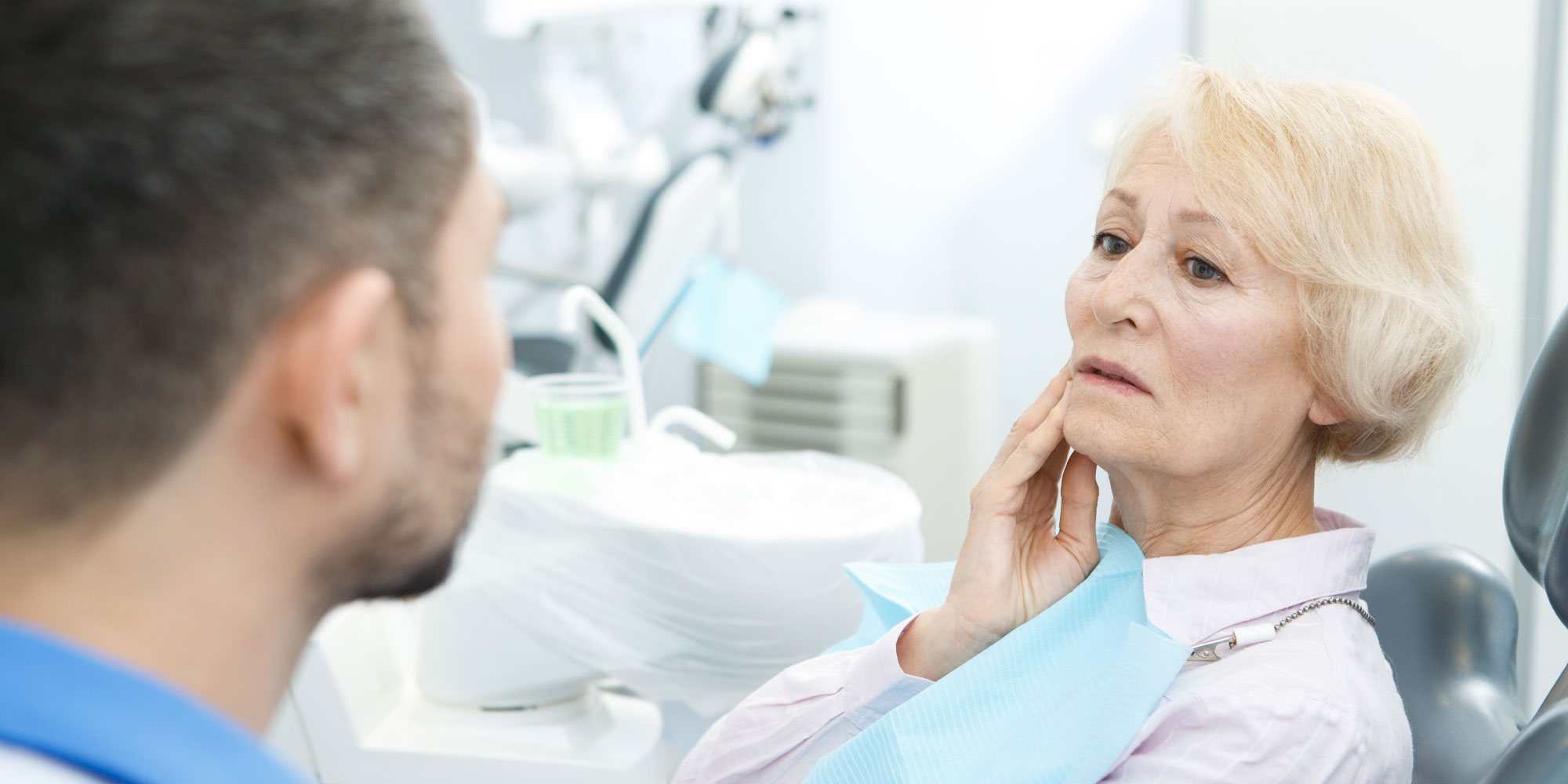
A denture that rests on the gums has nothing to hold on to, and the bone under it keeps shrinking, so the fit only gets worse.
Implants change both halves of that. They anchor the denture, and they give the bone a root to hold on to.
Conventional or supported.
The same denture shape, a different foundation.
Traditional denture
Rests on the gums
- Removable
- Lasts five years or more
- Eventually needs adhesives
- Allows bone recession
- Limits food choices
Implant-supported denture
Snaps onto implants
- Removable or fixed
- Lasts ten years or more
- Secured by two or more implants
- Limits bone recession
- Expands food choices
Fixed full arch
All-on-4®
- Fixed, never removed
- Lasts decades
- Four or more implants
- Prevents bone recession
- No dietary limits
How the denture gets its roots.
- Step 01
Consultation
A scan and impressions, a conversation about what your current denture does and does not let you do, and a plan. Most patients qualify already; the rest usually can after grafting.
- Step 02
Placement
Implants go where the jaw is densest, usually toward the front. Sedation keeps it comfortable. In many cases your existing denture is adapted to fit them.
- Step 03
Healing
Three or more months while the implants integrate. A temporary denture, or your adapted one, is worn throughout.
- Step 04
The attachment
Ball or bar attachments are fitted and the final denture clicks on. It can be made removable for cleaning or permanently attached.
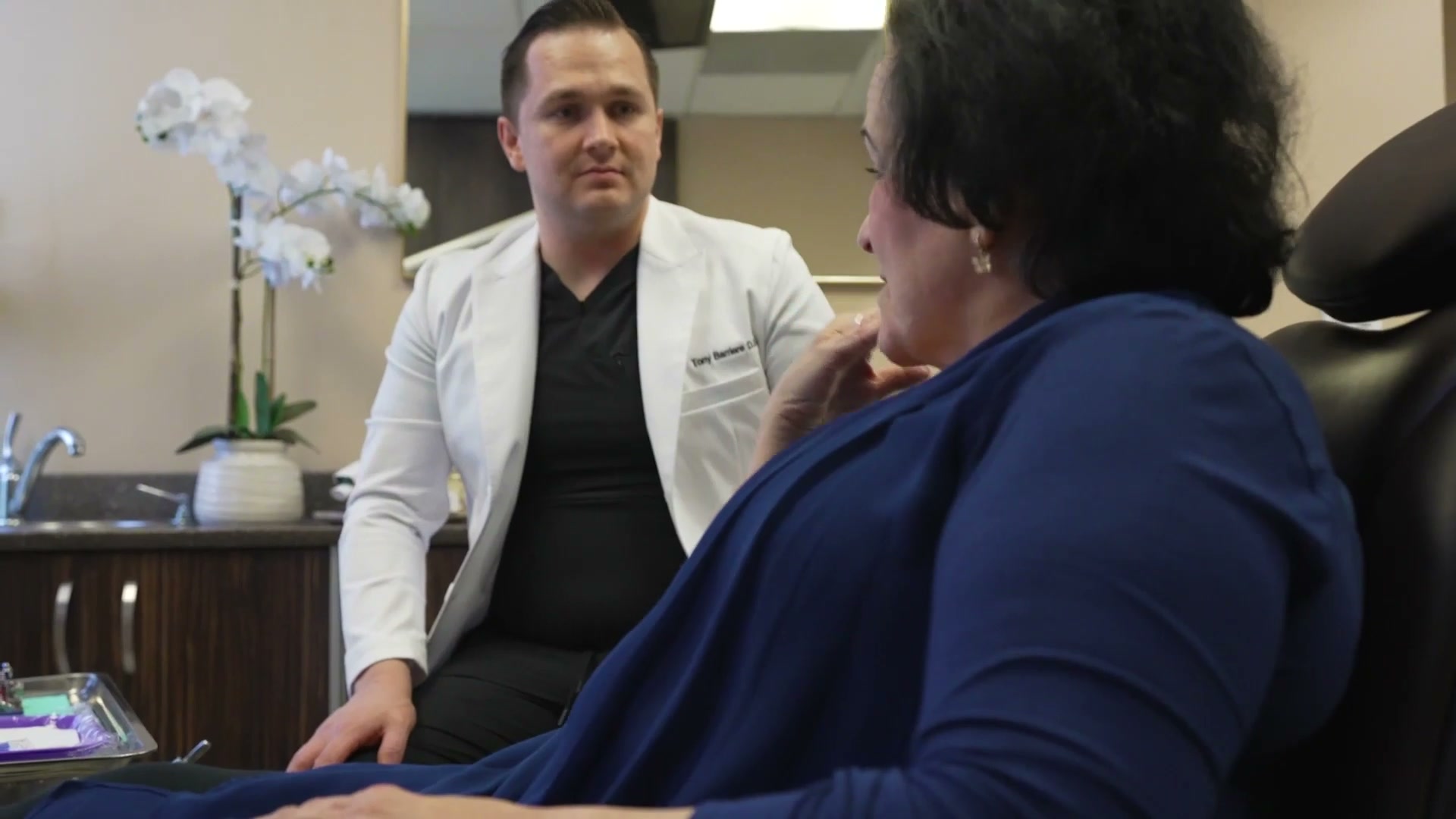
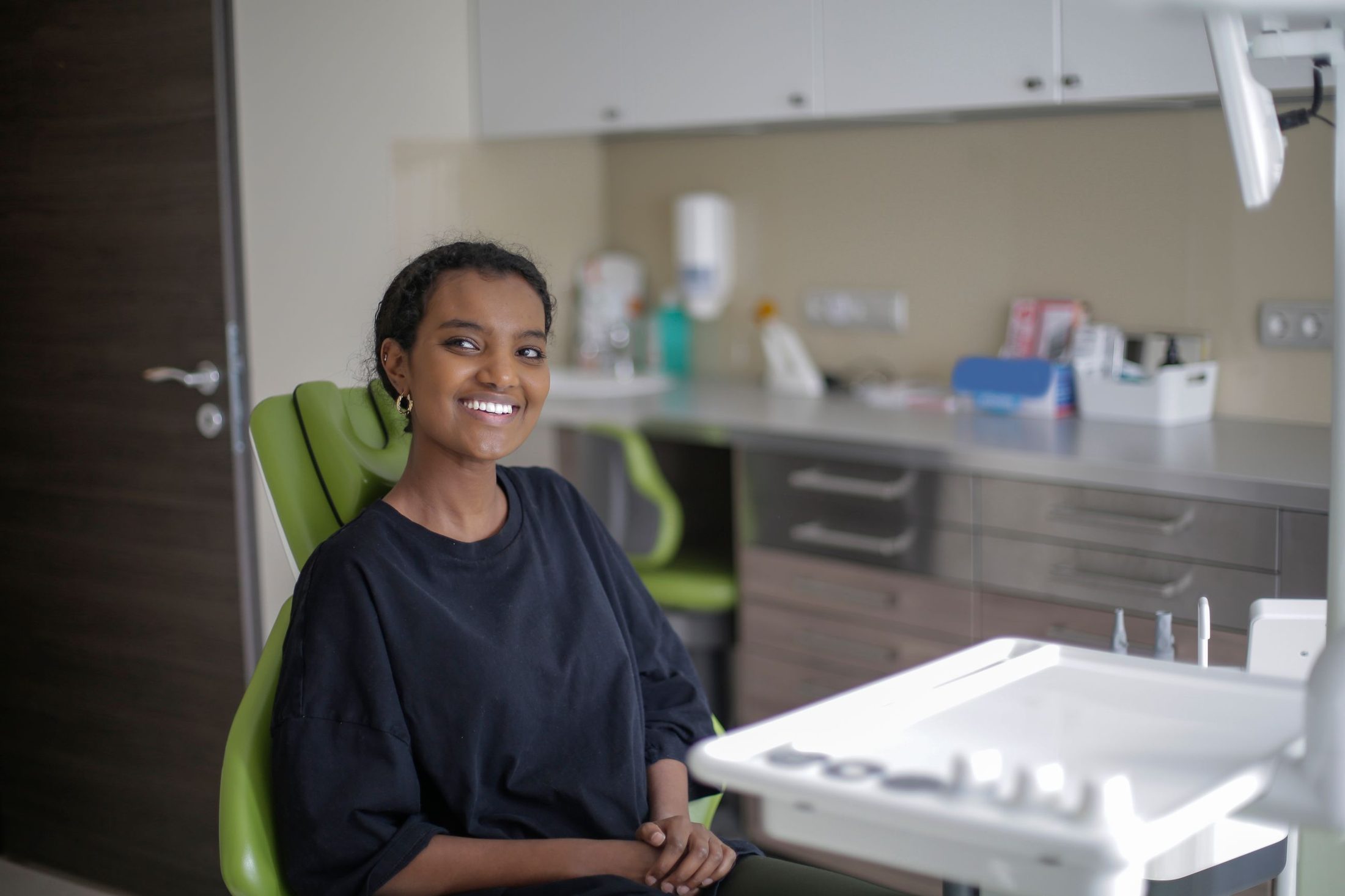

Bite, chew, laugh, forget about it.
Biting pressure moves from the gums to the implants, so the denture stops rubbing and the bone stops receding.
Patients describe the same thing in different words: a meal without thinking about the denture, a conversation without a hand near the mouth.
The upfront cost is higher than a conventional denture and lower than a fixed arch. Over the years it usually saves the relines, the adjustments and the replacements.
- No slippingAnchored by implants
- No adhesivesSnaps into place
- Less bone lossImplants stimulate the jaw
- Wider dietChew with confidence


Denture questions.
Often, yes. Many dentures can be adapted to snap onto the new implants, which keeps the cost down and the shape you are used to.
Two or more per arch for a removable design. More implants give more support and open the door to a fixed arch instead.
A removable design is taken out for cleaning; a fixed one stays in and is cleaned like teeth. Dr. Barriere will recommend one based on your bone, your hygiene and what you want.
More upfront than a conventional denture, less than All-on-4®, and quoted after a scan. Insurance, five financing partners and the in-house savings plan are on the financing page.
Make the first step feel clear.
A consultation covers candidacy, options, sedation, financing and timing. No pressure, no surprises.
Same-day emergency appointments